
Glassman Subaru – Subaru SUVs vs Toyota SUVs — Built for Freeze-thaw Roads near Farmington Hills, MI
Winter mornings that start with black ice on I-696 and afternoons that end with new potholes on Twelve Mile are a fact of life around Farmington Hills. At Glassman Subaru, we meet shoppers cross-comparing Subaru and Toyota because both brands are known for reliability and all-weather capability. The big difference comes from how each brand approaches all-wheel traction, ground clearance, and driver-assist technology for Michigan’s freeze-thaw cycle. If daily life means wet leaves on Hines Drive in fall, slush on Orchard Lake Road in January, and gravel parking lots at Kensington Metropark year-round, understanding those differences will help you choose the right partner for the road.
This blog focuses on family-friendly SUVs and crossovers from each brand—the types of vehicles most Farmington Hills drivers put to work every day. Our goal is to be transparent and helpful while highlighting what our Subaru lineup does especially well in Metro Detroit weather. We will also cover questions we hear from in-market shoppers who test-drive with us here in Southfield.
Subaru builds confidence around a foundation of Symmetrical All-Wheel Drive, a longitudinal layout that balances power front-to-rear and side-to-side all the time. That full-time approach is different from the on-demand systems commonly found in Toyota crossovers, where front-wheel drive is standard and AWD engages when slip is detected. Toyota offers advanced systems on select models—such as available torque-vectoring AWD and multi-mode traction controls—but availability can vary by trim and model. For drivers who face surprise lane slush on the Lodge or a dusting of lake-effect snow on the ramp from M-5, the way Subaru keeps all four wheels engaged feels natural and predictable in those first few critical feet.
Ground clearance plays a real role in Michigan winter. Subaru SUVs like Crosstrek, Forester, and Outback commonly deliver 8.7 inches of clearance, and Wilderness models push even higher. That extra space helps the bumper clear frozen ruts and deep slush at subdivision speeds. Many Toyota crossovers post competitive numbers—some RAV4 grades are close—but Subaru’s consistency across the lineup means shoppers do not have to hunt for a single specialized trim to get winter-friendly clearance. Paired with a low center of gravity from Subaru BOXER engines, this combination keeps the body settled over rough surfaces while giving the underbody more room when the city plow has not yet reached your block.
When traction drops from packed snow to polished ice at a stoplight, how the vehicle manages throttle and braking matters as much as raw power. Subaru X-MODE, available on many of our SUVs and standard on select trims, optimizes throttle mapping, shift strategy, and torque distribution for low-traction starts. It also adds Hill Descent Control for those slow, controlled crawls down an icy neighborhood street. Toyota offers comparable surface-select systems on certain models, and those features can be very effective when equipped. The practical difference shoppers notice on our test drives is how easy X-MODE is to engage—with a single press—in day-to-day, non-extreme conditions like slushy intersections or muddy trailheads after spring thaw.
Safety tech is a cornerstone for both brands, and that is good news for Metro Detroit families. Subaru equips most models with standard EyeSight® Driver Assist Technology, which uses dual-color cameras to create a broad, stereo view of the road. Features include Advanced Adaptive Cruise Control with Lane Centering, Pre-Collision Braking, and Lane Departure and Sway Warning. Toyota Safety Sense offers a comparable suite across much of its lineup using camera and radar inputs. From our customers’ perspective, the value is in how these systems reduce fatigue on congested commutes between Farmington Hills and Southfield. EyeSight® is engineered to work smoothly in the cut-and-merge traffic patterns common on I-275 and I-696, and many shoppers tell us the steering support and following-distance management help weekday driving feel less stressful.
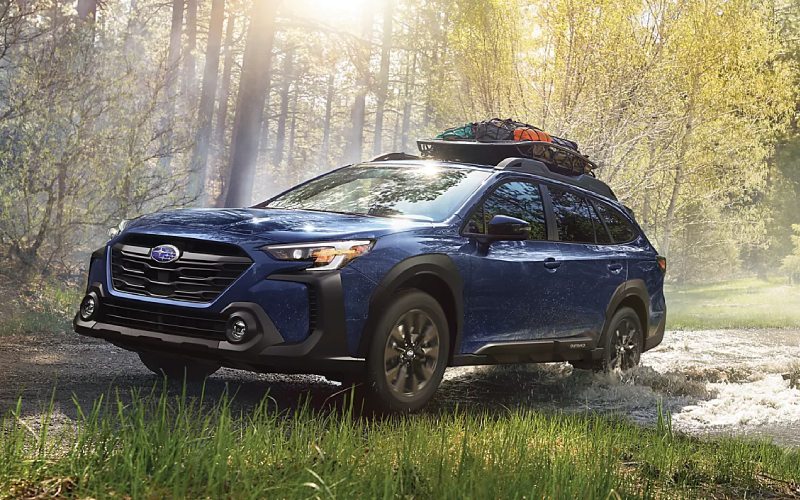
Everyday utility rounds out the story. Subaru Outback’s raised roof rails with integrated swing-in crossbars make it simple to load skis for Pine Knob or a cargo box for an Up North weekend—no separate crossbars required. Forester and Crosstrek offer robust rail systems with wide aftermarket compatibility as well. Toyota provides strong cargo solutions too, though integrated crossbars are a Subaru hallmark that owners appreciate once the garage routine begins. Inside, Subaru cabins emphasize tall windows and thin pillars for visibility, which is a quiet advantage when backing out of a snowy driveway or judging a slushy curb on Grand River Avenue.
Technology and connectivity expectations are similar across both brands, with large touchscreens and wireless Apple CarPlay and Android Auto widely available. Subaru focuses on consolidated, driver-centric controls—an approach that pairs nicely with gloves-on winter operation and quick defrost adjustments. Toyota brings an equally modern interface with voice control depth that many shoppers like. Here at Glassman Subaru, we encourage drivers to sit in both and try common tasks such as map zoom, seat heater toggles, and camera views to see which interface feels more natural.
For powertrains, Subaru’s signature BOXER layout contributes to a low center of gravity, helping stability over uneven pavement and mid-corner bumps—exactly the kind that appear after heavy snowmelt. Toyota counters with a broad set of engines and hybrids across the lineup. Subaru also offers electrified choices, including the dual-motor Solterra EV with standard AWD, and continues to expand electrified options. We recommend a back-to-back drive on mixed surfaces—Telegraph Road to neighborhood streets—to feel how the chassis and drivetrain deliver traction and composure in real time.
Ownership experience matters as much as engineering. Our service team at Glassman Subaru in Southfield uses specialized tools and Genuine Subaru Parts designed around the same safety systems and AWD components that make Subaru stand out in winter. Factory Trained Teams understand how to keep EyeSight® calibrated and Symmetrical All-Wheel Drive performing as intended—important details when curbs are icy and potholes arrive overnight.
To make the comparison even clearer for Farmington Hills shoppers, here are the practical takeaways we discuss during test drives:
- All-weather traction philosophy: Subaru focuses on full-time Symmetrical All-Wheel Drive across core SUVs, delivering balanced grip before slip; Toyota commonly starts with front-wheel drive and offers AWD as needed by model and trim.
- Ground clearance consistency: Subaru SUVs commonly provide 8.7 inches of clearance with Wilderness models higher, supporting unplowed side streets and rutted trailheads; Toyota offers competitive clearance on select trims but less uniformity across the lineup.
- Low-traction tools: Subaru X-MODE simplifies traction optimization and adds Hill Descent Control for icy declines; Toyota includes comparable terrain-select features on certain vehicles with varying availability.
- Winter visibility and control: Subaru designs emphasize expansive glass and intuitive controls that are easy to operate with gloves; Toyota interfaces are modern as well, with different menu logic that some drivers may prefer.
- Safety systems approach: Subaru EyeSight® uses dual cameras for a stereo view and confidence in stop-and-go traffic; Toyota Safety Sense provides a robust feature set using camera and radar across many models.
- Roof-carry convenience: Subaru Outback integrates swing-in crossbars for quick weekend loading; Toyota offers strong solutions, though integrated crossbars are a distinct Subaru advantage.
When the question becomes which brand is the better fit for life near Farmington Hills, we recommend using your daily routes as the test. Drive a Subaru and a Toyota on the same morning loop—Telegraph Road, a stretch of I-696, and a few residential turns with plow berms left at the curb. The differences in traction handoff, steering confidence, and ride over patched pavement tend to reveal themselves within a few miles.
Frequently Asked Questions:
Which Subaru SUVs include standard Symmetrical All-Wheel Drive?
Every Subaru SUV—Crosstrek, Forester, Outback, Ascent, and the dual-motor Solterra EV—comes with standard all-wheel traction. Symmetrical All-Wheel Drive is core to Subaru engineering and part of what makes these vehicles feel composed on Michigan’s variable surfaces.
How is Subaru X-MODE different from Toyota’s terrain-select features?
X-MODE coordinates the engine, transmission, AWD clutch, and Vehicle Dynamics Control to maximize traction at low speeds on slippery surfaces and adds Hill Descent Control. Toyota offers terrain-select modes on specific models and trims. Functionally, both approaches improve grip; Subaru emphasizes one-touch simplicity and availability across everyday trims.
Do Subaru SUVs really ride better over potholes and ruts?
Ride feel is subjective, but many shoppers notice that the low center of gravity from Subaru BOXER engines and the suspension tuning across Subaru SUVs deliver a settled, controlled response over mid-corner bumps and patched asphalt—useful on local roads after winter thaw.
Is EyeSight® standard, and does it help in Metro Detroit traffic?
Most Subaru models include EyeSight® Driver Assist Technology as standard. Features such as Advanced Adaptive Cruise Control with Lane Centering and Pre-Collision Braking are designed to assist in heavy, stop-and-go patterns common on I-696 and I-275. Drivers remain responsible for safe operation at all times.
What about hybrid choices if most miles are suburban commutes?
Subaru offers electrified options, including the all-electric Solterra with standard AWD, and continues to expand hybrid availability. Toyota also offers multiple hybrid configurations. We suggest a test drive focused on low-speed smoothness, brake feel, and traction behavior on wet pavement to find the right match.
Are Subaru roof rails ready for skis, kayaks, or a cargo box?
Yes. Outback features raised roof rails with integrated crossbars, and Forester and Crosstrek offer robust rail systems with broad accessory support. That makes weekend packing for Kensington Metropark, Pine Knob, or an Up North trip straightforward.
How can I feel the AWD difference quickly on a test drive?
Ask our team for a short loop that includes Telegraph Road, a freeway on-ramp, and neighborhood streets. Light throttle launches on damp pavement and lane changes over rough patches help surface the differences in traction, steering feedback, and body control between brands.
If you are shopping near Farmington Hills, our team at Glassman Subaru is happy to set up a same-day, back-to-back comparison so the conditions you face—snow dustings, salt slush, and spring heaves—guide the decision. Visit us at 28000 Telegraph Rd in Southfield to explore Subaru SUVs alongside your shortlist and experience Symmetrical All-Wheel Drive, X-MODE, and EyeSight® on the roads you drive every day.
From routine maintenance to accessories for weekend gear, our Factory Trained Teams, Genuine Subaru Parts, and convenient hours are here to support ownership long after the test drive. Reach out to schedule, and let our team tailor a route that reflects real Farmington Hills driving—so the right choice becomes clear the moment the weather changes.
Request more information
Connect with us


- 2024 Subaru Ascent
- Auto Service & Parts
- Glassman Subaru
- Service
- Subaru accessories
- Subaru Ascent
- Subaru body shop
- Subaru BRZ
- Subaru Crosstrek
- Subaru Crosstrek Hybrid
- Subaru Dealer
- Subaru Dealership
- Subaru Forester
- Subaru Forester Hybrid
- Subaru Forester Wilderness
- Subaru genuine parts
- Subaru Impreza
- Subaru Legacy
- Subaru Outback
- Subaru Outback Wilderness
- Subaru parts
- Subaru Service
- Subaru Solterra
- Subaru Tires
- Subaru Transmissions
- Subaru WRX
Categories